

Featured

Quick View
$25.00
All transcendence has disappeared, the natural world has been liquidated and substituted for an artificial one. After surveying consumerism and its sequel, the landfill, the price of production became of paramount interest. A direct threat to sacred landscapes, historical infrastructures, natural landmarks and topography, the environmental impacts of mining are large-scale and permanent. Although multinationals insist that the technologies in place ensure environmentally friendly practices, evidence proves otherwise. The deposition and leaching of toxic chemical such as arsenic and nitrogen contaminate local water supplies, poisoning its inhabitants and disrupting the entire ecosystem. As the landscape grows silent, wake up, the stakes are high with there being no end in sight for industrial expansion.

Quick View
$25.00
Historicity is informed by the constant transformative relationship between past and present, explored here through the archiving of transnational urban topography. Formulaically framed, this photographic compilation methodically archives the terrain of different localities around the world. Exploring how humans reshape the natural topography, my interest lies in how the perspectives provides an ethnographic study revealing the cultural historicity, socio-economics and geography of a time and place.

Quick View
$25.00
History reveals itself in the details. Inscriptions and visual articulations of the past, temporally estranged, yet spatially layered, are transcribed simultaneously on the walls of cities conceding as a form of ethnography. This compulsive archiving reflects both the undifferentiated society of the globalized world, while also exposing the cultural historicity connected to the details defining a place. The systemic and global documentation of city walls provides a field study of empirical data revealing the ethnogenesis, politics, religions and cultural truths of a locality and their connection to the landscape.

Quick View
$25.00
How will history judge us? Over the past several centuries, humanity has raked the land of its resources, threatening the balance of the natural world. The nature of the earnings that define late capitalism have incidentally raped us of nature itself. Contemplation of the future is lost in the inundation of illusory pleasures and distractions pioneered by the media. The excess and pollution we produce mirrors our own social and spiritual decay. Mankind faces a time of impending consequence stemming from decades of disregard for the world in which we live.

Quick View
$25.00
Harm here is here there. In the throw-away culture of America, a landfill serves as a haunting metaphor for the postindustrial dilemma. It is a locus of decay, the residual of systemic greed and excess, a politically layered sites where relics from our past rot. The accelerating rate products are consumed, replaced, burned up and thrown out put an inexplicable strain on the environment. The illusion hinging happiness on consumption has consequences that manifest in toxic mountains shielded from public view. This ignorance is no longer a haven to bliss, but rather a threat to sustainability. In addressing America's culture of waste, I conflate the catalyst to consumption with its residual through mounting the images of landfills on light-boxes to stylistically mimic advertisements. Through this de-contextualization, one hopes to generate a sense of social consciousness around the cultural phenomenology of consumerism.

Quick View
$25.00
As desertification and extreme weather patterns delimitates habitable and uninhabitable zones, it is clear that the earth can’t eternally withstand the strain of the industrialized world. Central to this work is the question of human survival in relation to nature and a global environment increasingly defined by unpredictability.
Quick View
$25.00
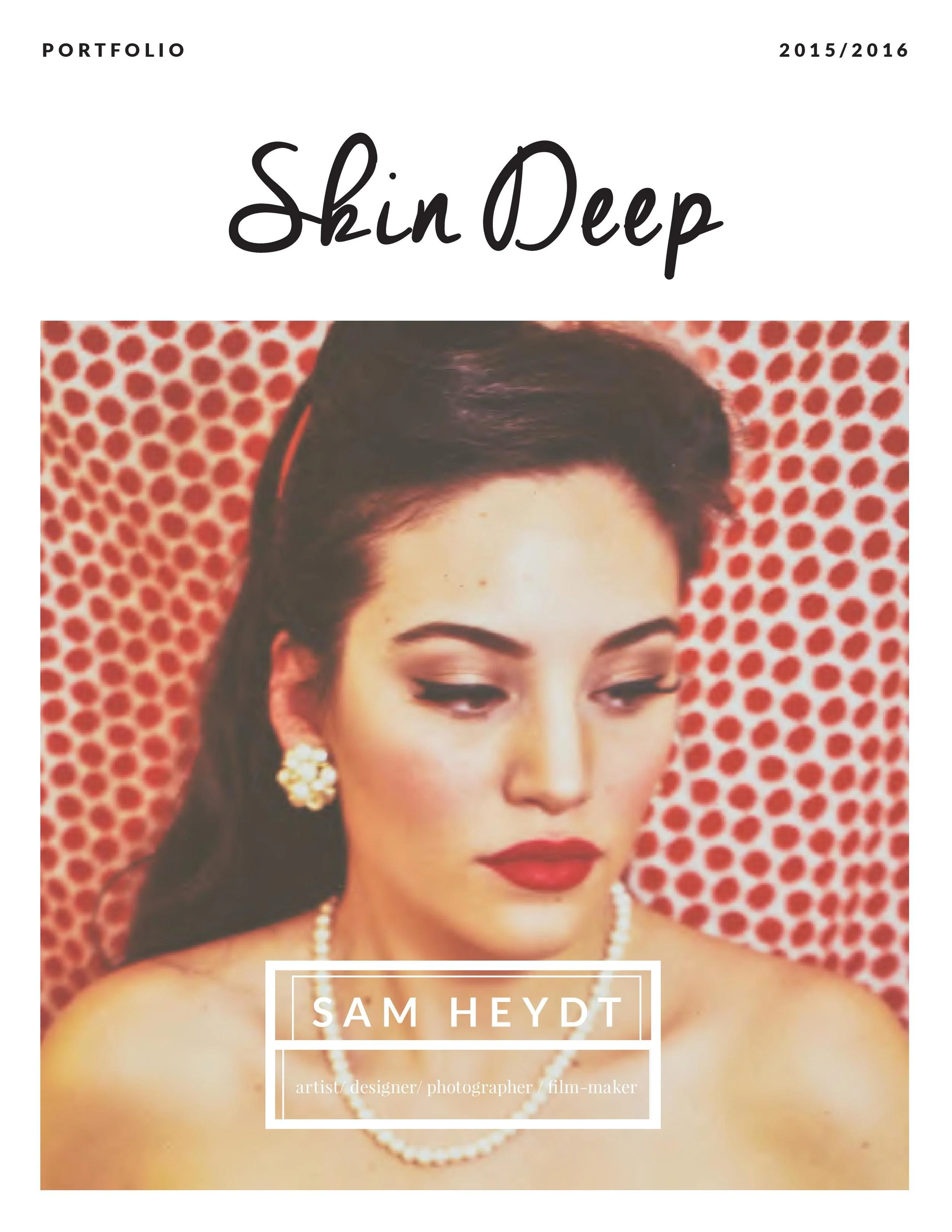
Colonized, commodified, and reshaped by market forces, the palimpsestic female body is a site where cultural phenomenology and social perversions have historically been inscribed. The state of the spectacle empties and nullifies every real identity. In its place, the media offers ideologically infused avenues for identity construction. From the array of media text, gender roles are realized, social norms are cemented and beauty standards are established. Becoming the new feminine ideal requires the right combination of insecurity, exercise, bulimia and surgery. Low self-esteem, body dysmorphia, and botox junkies are symptoms of a society that propagates beauty as the standard against which all women are measured, hinging a woman’s worth on her waistline. Self-hood has become a shifting experience-inauthentic and skin deep.
Quick View
$25.00
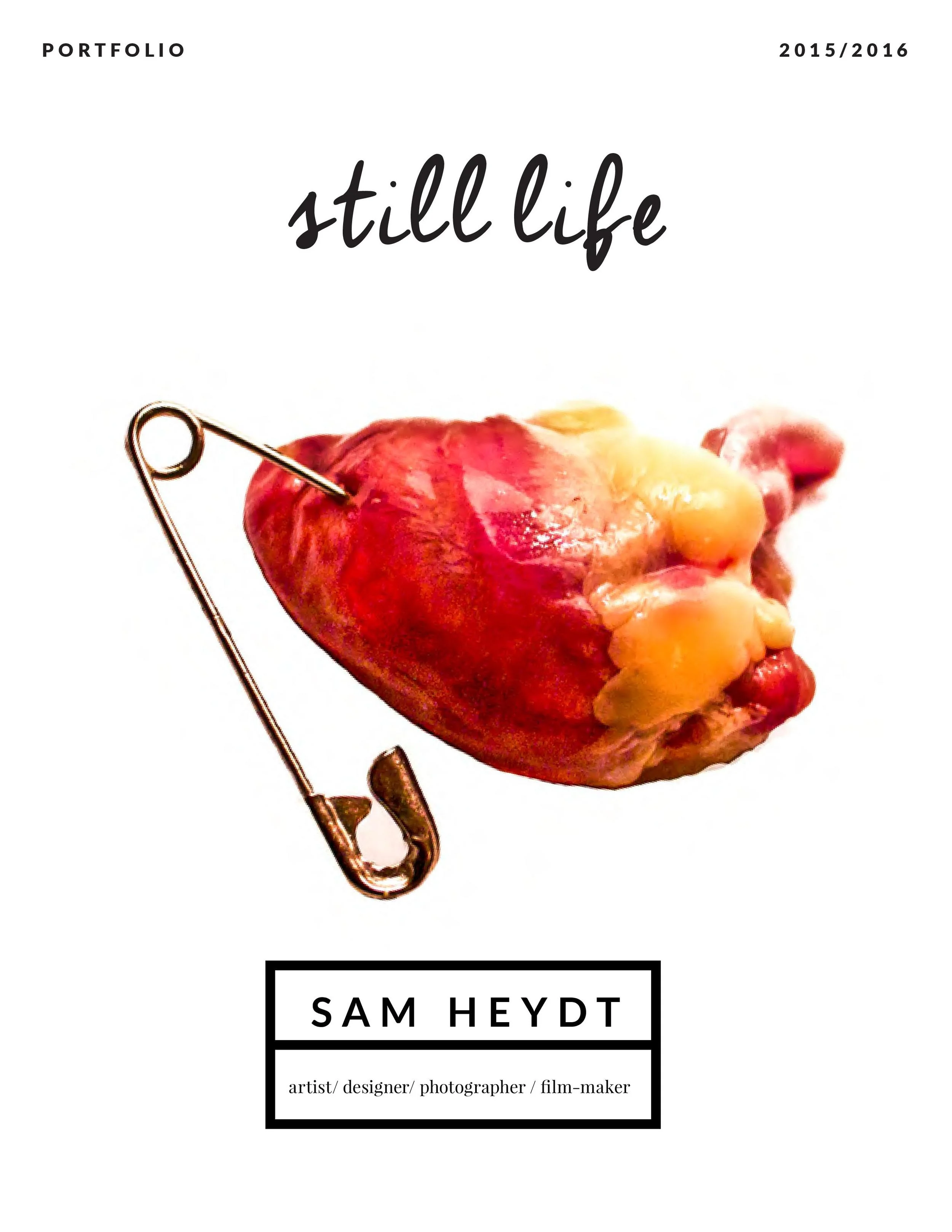
Revisiting the contemporary notion of the still life or la nature mort, ‘dead nature’ in French, I re-conceptualized the aesthetic tradition through documenting flesh in the space between pulse and plate. Outside of the play on words, the aspiration underpinning this body of work is to shed light on the socially acceptable, normative practice of animal brutality and consumption. The psychological schism in most peoples mind between the slaughter house and the Big Mac stems from a dangerous ignorance rooted in convenience and socio-economics. Our cultural norms of consumption have become the catalyst to the inhumane slaughter of animals executed on a mass scale.

Quick View
$25.00
The photographic process of a pin hole camera emerges as a praxis for memory function. The automatic writing of light cast onto the interior gives an abstract sense of an instance, and thus a multiplicity of semiotic meaning. The complete story of the moment is absent, so one builds a narrative around it. As in the case of the Rorschach cards, each photograph provides the room for interpretation, offering contradictory and complicit narratives stemming from the same image.
Quick View
$25.00
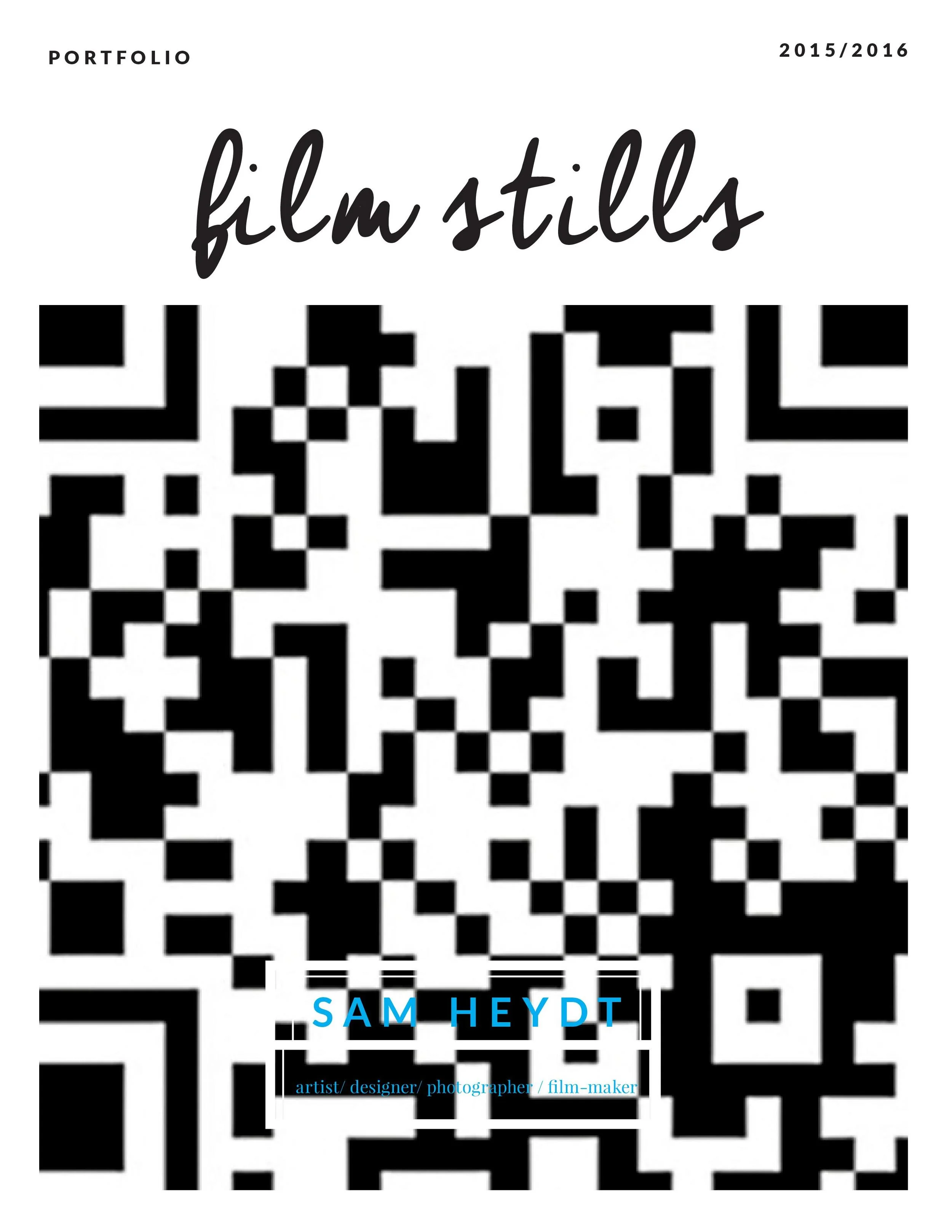
The first medium to store time was the moving image, yet how time is then sorted and confined continues to evolve. This compilation of scratch films viewable through QR Codes conflate old and new technology, while also complicating the notion of how time based things can be confined.
Quick View
$25.00
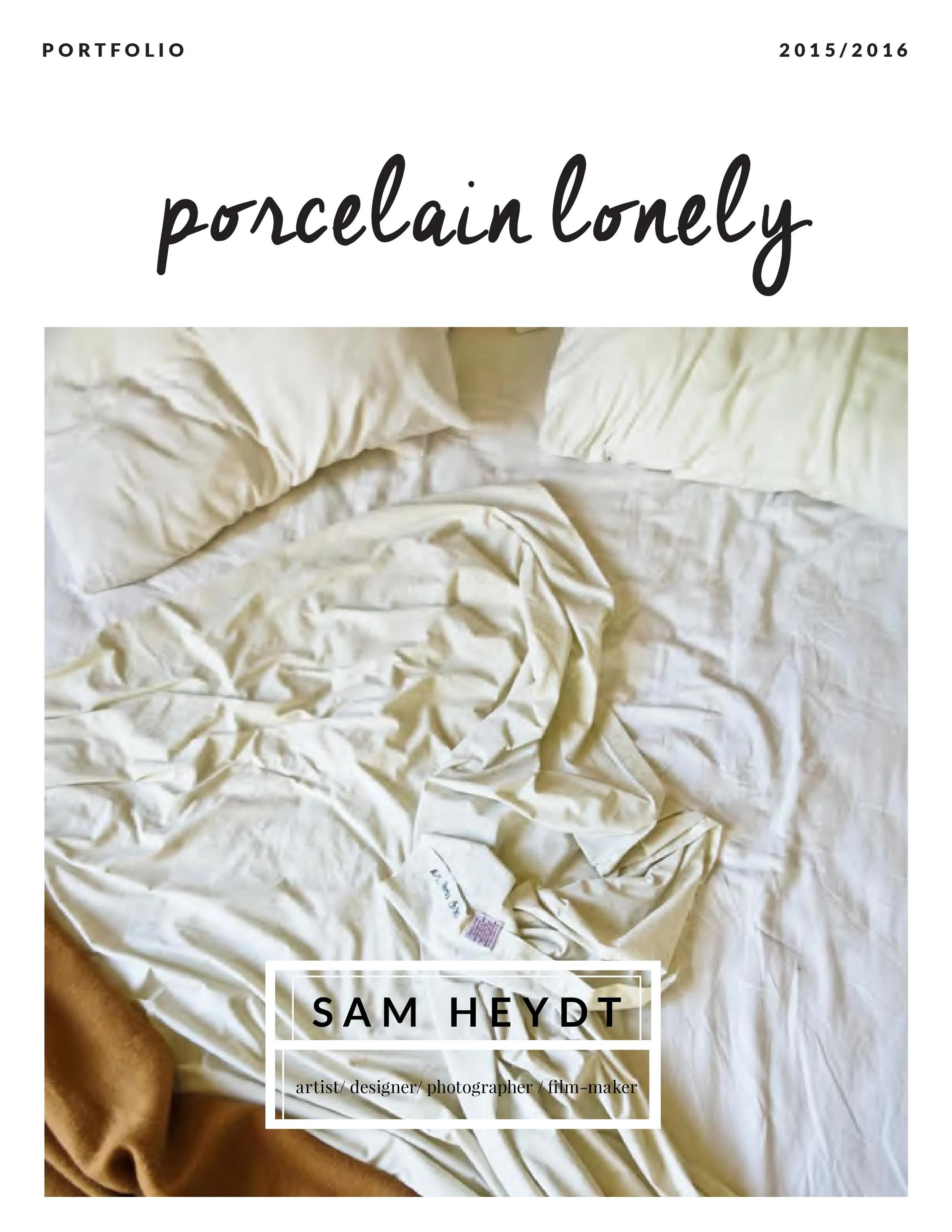
Presence is defined by its absence. Interested in the transient space of motel rooms, this series solicits a recognition of the collective experience-looking at how objects wear time, details become mysterious and mundane moments go unregistered, yet internalized.
Quick View
$25.00
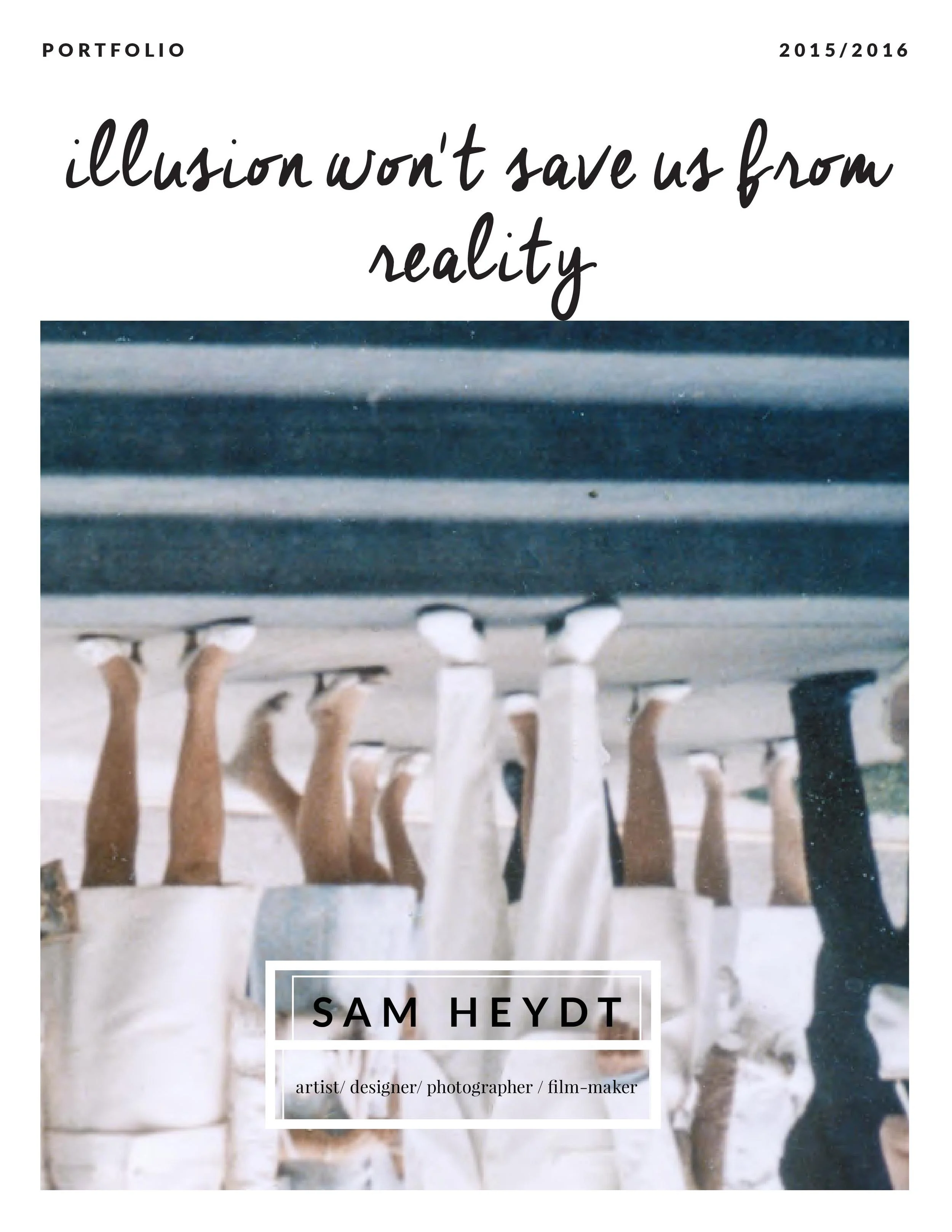
The social landscape has become a noisy, fractured space dominated by advertisements. Ideologically encoded, the media posits meaning through the relational system of signs. Ultimately, these binaries confirm the complicities of the medium and dismiss the fragile argument that photography is merely a tool of mimesis. Truth is lost amongst the arbitrary and insignificant objectives semiotically spun as we back sedated by the flickering screen and the false promises it proposes for the future it truncates.
Quick View
$25.00
The world, no longer in focus, has succumb to a blur of movement amidst the obscurity of media images and sequence of endless distractions and schizophrenic moments. In the space of post-history where all grand narratives dissipate, technological dependency diminishes the tangibility of our experiences. Our collective consciousness has been reduced to a scattered daze that drifts from the new multiplex to old strip mall, from one meal to the next, twitter to text message, coffee to cigarette, rush hour traffic and the fast food drive thru. The struggle is apathy, complacency, it never being enough, China, Iraq, the C.I.A. Somewhere in the numbing hours in front of the TV our life slips away between commercials, our attention still hijacked by the next new thing flickering on screen.

Quick View
$25.00
The revival of landscape photography in the contemporary art world begs the question of how the aesthetic tradition has over the centuries shaped our socially constructed vision of the world. With representation hinged on the singularity of perspective, what is left out a frame is as important as what is framed within. These fleeting moments, hijacked on the drive-by, take an untraditional approach to landscape photography. With an interest in towns that you could pass through without ever knowing you’ve visited, this compilation document non-destinations. My desire to define home led me to archiving what wasn’t. Shooting through a window, the laying of surfaces speaks to the admitted degrees of separation I had from the places documented.

Quick View
$25.00
Disney as culture is the opposite of culture as destiny. Landscapes have become commodified and packaged as consumable experiences. The self containerization of nature is a reflection of our increasing alienation from it. Beauty, preservation, development, exploitation, regulation: these are historical matters in flux, not essential conditions of landscape. This body of work is in response to man’s transformation of the natural environment into paved paths and manicured lawns. In its relentless commercialization, the symbolic capital of heritage sites are estranged from their singularity, homogenized and diluted in their commodification.

Quick View
$25.00
The vices of the first world are the burden of the third. Globalization has moved forward unevenly and no-one can say where this "New Frontier" is leading us. Over the past thirty years, we have witness the relationship between capital and labor growing increasingly estranged, and living standards falling with the deindustrialization and the outsourcing of labor to less developed nations. These material inequalities are symptoms of a world reduced to the bottom line, one defined by patterns of peace and war, material inequalities and transnational divisions of labour handicapped by its own historical/institutional (dis)placement. The violence of globalization is both economic and cultural. In integrating the singularity of forms (languages, culture, etc) within a culture of difference, the universal is bound to reject and marginalize.

Quick View
$25.00
A constellation of abandoned farmhouses are scattered unremittingly across the barren land of the Icelandic countryside, where the impoverished stretch of arid terrain has forced families to forsaken their homes.

Quick View
$25.00
The non-linear equations of evolution, totality of reality and the complex interrelationship of its parts are unseen by the naked eye. Under magnification, patterns of order and new structures emerge, a symmetry is found in the chaos.

Quick View
$25.00
Imagery by Sam HEYDT alongside Allen Ginserg's 1955 poem Howl, dedicated then and now to Carl Solomon.

Quick View
$25.00
“Working with a wide range of subjects all over the world, Sam Heydt (b. 1986) explores the visuals unique to different places in distinctive cultures. Bursting with color, vibrancy and intrigue Heydt’s images uncover spectacular moments of beauty within the landscape. Although, she works in a variety of locations, such as Cuba, India, Iceland, Austria, Thailand and the USA, the ideas she continuously examines are universal, making her vision accessible to as wide as audience as possible. Alongside captivating fine art projects, she has also produced commercial collections for a multitude of publications including Vice, W Magazine, V Mag and Photo Magazine. The New York based artist, writer and filmmaker has exhibited works in a number of galleries internationally, in places such as Russia, Australia, Europe, as well as in the USA. The following series of photographs is an overview of Heydt’s extensive body of work and in particle her interest in travel. www.samheydt.com”
- Aesthetica Magazine

Quick View
$25.00
As the technical age cannibalizes the medium, contemporary photography oscillates from being an “archival medium” to a self-aware one. There are endless representations of a single moment which complicate the veracity of a single photograph. The relation of the spectator to spectacle is an intricately gendered system: men act and women appear. Men look at women. Women watch themselves being looked at. Women come to define themselves according to how they feel they are perceived. A dialectic between the voyeur and the subjective- a photograph often unveils more about the photographer than the subject. This body of work speaks to the pluralities of experience, the complexities of shifting subjectivities and the absence of authorship- it is about misguided gazes, sex, loss and acceptance.

Quick View
$25.00
Contemporary cultural narratives speak to our common aspirations, fears, and perplexities. Ritually retold, these stories reinforce a constructed history and sustained narrative that we collectively buy into. There is no reality outside representation. Subconsciously we are structured by this repertoire of codes and grammar of meaning. The ideological contradiction at the heart of this myth is the delusion underpinning it. The simulacrum does not hide the truth, but rather reveals its absence. The medium has swallowed the message, while the multi-medium proliferated it in all directions. The poverty of experience at the hands of our hyper-accelerated society brings into question the politics of memory. How do we come to understand ourselves if not in relation to our past, our history, our heritage? If selfhood is built on an accumulation of the memories what happens when they are diluted by the countless narratives flickering on screen?
As the technical age cannibalizes the medium, contemporary photography oscillates from being an “archival medium” to a self-aware one. There are endless representations of a single moment which complicate the veracity of a single photograph. The relation of the spectator to spectacle is an intricately gendered system: men act and women appear. Men look at women. Women watch themselves being looked at. Women come to define themselves according to how they feel they are perceived. A dialectic between the voyeur and the subjective- a photograph often unveils more about the photographer than the subject. This body of work speaks to the pluralities of experience, the complexities of shifting subjectivities and the absence of authorship- it is about misguided gazes, sex, loss and acceptance.