
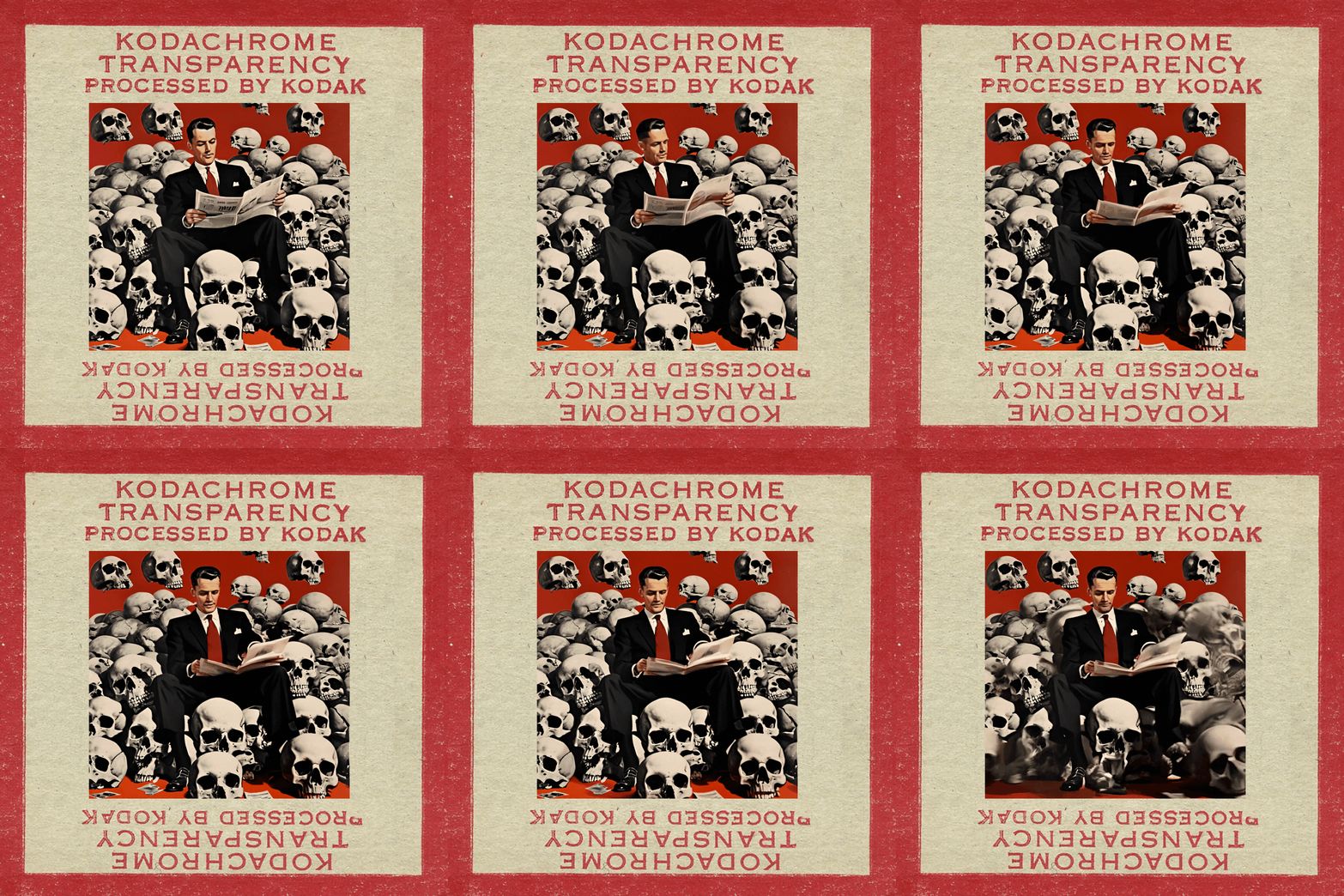
Parallax Frames explores the contradictions and fractures within perception, memory, and history, using the interplay of analog slide film and augmented reality (AR) as a dialectical medium. The project is rooted in the idea of the "parallax view," where meaning shifts depending on the position of the observer, revealing a world that resists singular interpretation. Slide film, with its tangible materiality and nostalgic evocation of the past, becomes a stage for AR intervention. The analog and digital collide, creating a visual tension that mirrors the disjointed realities of our lived experience. HEYDT confronts the ideological paradox of memory in the digital age, where the static nostalgia of analog slides is reanimated through augmented reality, exposing the inherent fragility of our constructed narratives. The work operates as a dialectical tension between the Real and the Imaginary: the slides, once fixed fragments of history, are destabilized by digital overlays—fractured sounds, flickering images, and archival detritus—that amplify their impermanence. The material artifact becomes a spectral object, a paradoxical presence that gestures toward the void—the absence at the heart of all attempts to fix meaning, to hold time still, or to reconcile the unreliability of what we remember with the instability of what we forget. The augmented reality signals an ontological uncanniness, with discrete semiotic strata remaining immanently entangled while evading synthesis. This dehierarchized co-presence of plural yet interconnected fields offers a glimpse of the Real as exceeding intelligibility.